Stop Your Lab Glass From Shattering
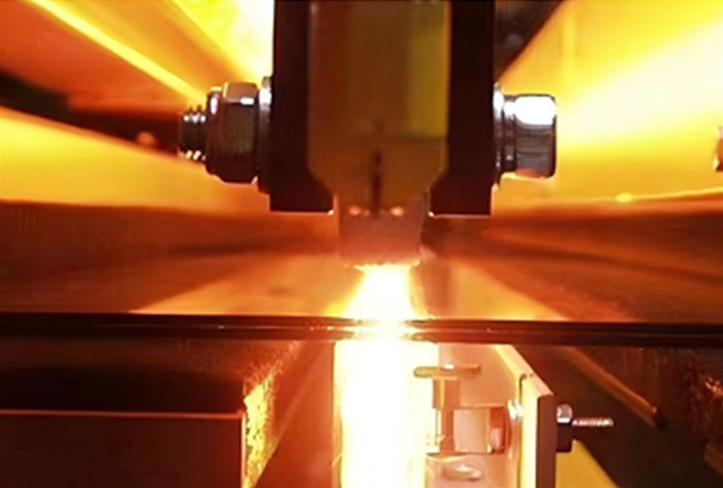
When you’re working with quartz or borosilicate glass, you’re basically walking a tightrope. One wrong move during the cooling process and that expensive piece of glassware becomes a pile of shards. It all comes down to internal stress. If you don’t let that stress bleed out slowly and steadily, the glass just gives up. That’s why we rely on high-precision IR heating elements tucked inside quartz sleeves. It’s the only way to really keep things under control.
Why 0.1°C Actually Matters
Most heating elements are too jumpy. They swing back and forth, and in this world, a 2°C flicker is enough to cause uneven expansion. That’s where the cracks start. We aim for a 0.1°C tolerance. It sounds obsessive, but it works. It keeps the glass right at that “sweet spot”—the annealing point—where the material is soft enough to relax its internal tension, but not so soft that it loses its shape. To pull this off, we pair high-density IR emitters with PID controllers that react instantly. The quartz sleeve is the secret sauce here; it protects the lamp but lets the short-wave radiation hit the glass directly.
The Catch
Nothing is perfect. We use quartz sleeves because they can take a massive thermal shock and they don’t block the heat. You get a direct line of energy. But they’re fragile. If a technician bumps one during a lamp change, or if the mounting brackets are clamped down too tight, the sleeve will crack. You have to handle them with a light touch.
Getting the Power Right
You can’t just plug these systems into a cheap power strip and hope for the best. If your voltage ripples, your heat ripples. To keep that 0.1°C accuracy, you need a rock-solid DC power supply or a high-end SCR. When the power is clean, the heat is uniform. No “hot spots,” no surprises, and no more watching your hard work spontaneously fracture in the middle of the night.