Introduction
We build custom infrared drying units, and honestly? They’re made for one thing: getting glass mosaic and screen-printed glass dry—fast and evenly—without taking over your whole floor. We pack the heater, the optics, and the control logic into one tight module. So you get serious drying power in a footprint that actually fits your plant.
The Space Trick (Without Sacrificing Power)
Here’s the thing: shrinking the machine doesn’t mean dialing back performance. It means packing more power into less space, and doing it smarter. A 400V supply drives the heater so hard that you get big heat from a short 300mm tube. That’s the kind of punch that lets you cut down the drying zone and still keep your line speed. Same throughput. Smaller machine. The 2500W rating isn’t random. It’s sized to match the real-world window for curing glass ink—hot enough to set pigments quickly, but controlled enough that you don’t stress the glass. And because it’s modular, you can stack or stagger units to match your print pattern. No more stretching one long oven across the line when a smarter layout will do.
What’s Inside (And Why It Stays Trouble-Free)
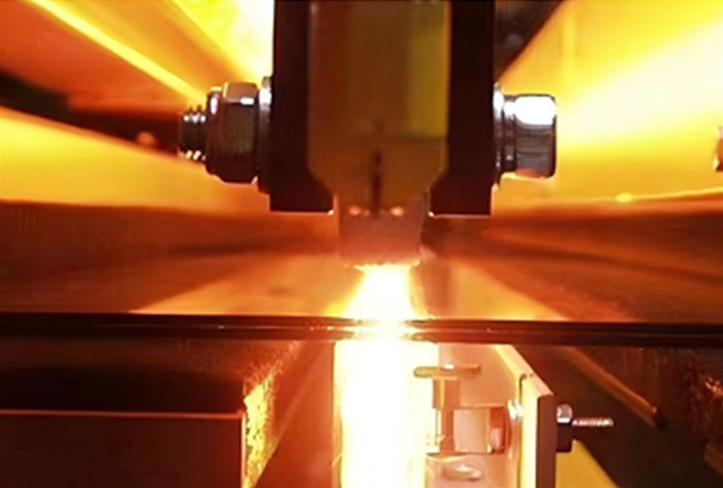
Inside, we run a shortwave infrared halogen element in a quartz tube. The filament hits temperature fast, so when the conveyor starts moving, the lamp responds immediately. No waiting around. A reflective coating on the tube wall pushes energy forward. That means less heat bleeding out the sides, and more protection for nearby parts. We use an R7s connector because it’s tough at high temps and easy to mount. It carries the current without creating hot spots, and when you need to swap a lamp, it’s quick—straightforward, line-ready, and simple to wire in.
What It Feels Like on the Floor
If you’re screen-printing glass, you know the frustration: ink that blooms, pinholes, and inconsistent results. This unit hits the print surface with focused infrared, curing the ink from the top down. The payoff is a process that repeats cleanly, with fewer rejects. Plus, you can save up to 40% floor space because the unit is short and self-contained. Installation is faster too—fewer ducts, fewer guards, fewer alignment headaches. One practical note: because the power density is high, the area around it gets warm. Make sure your conveyor and drive electronics have the airflow and thermal separation they need. Spec the cooling accordingly, and you’re good to go.